
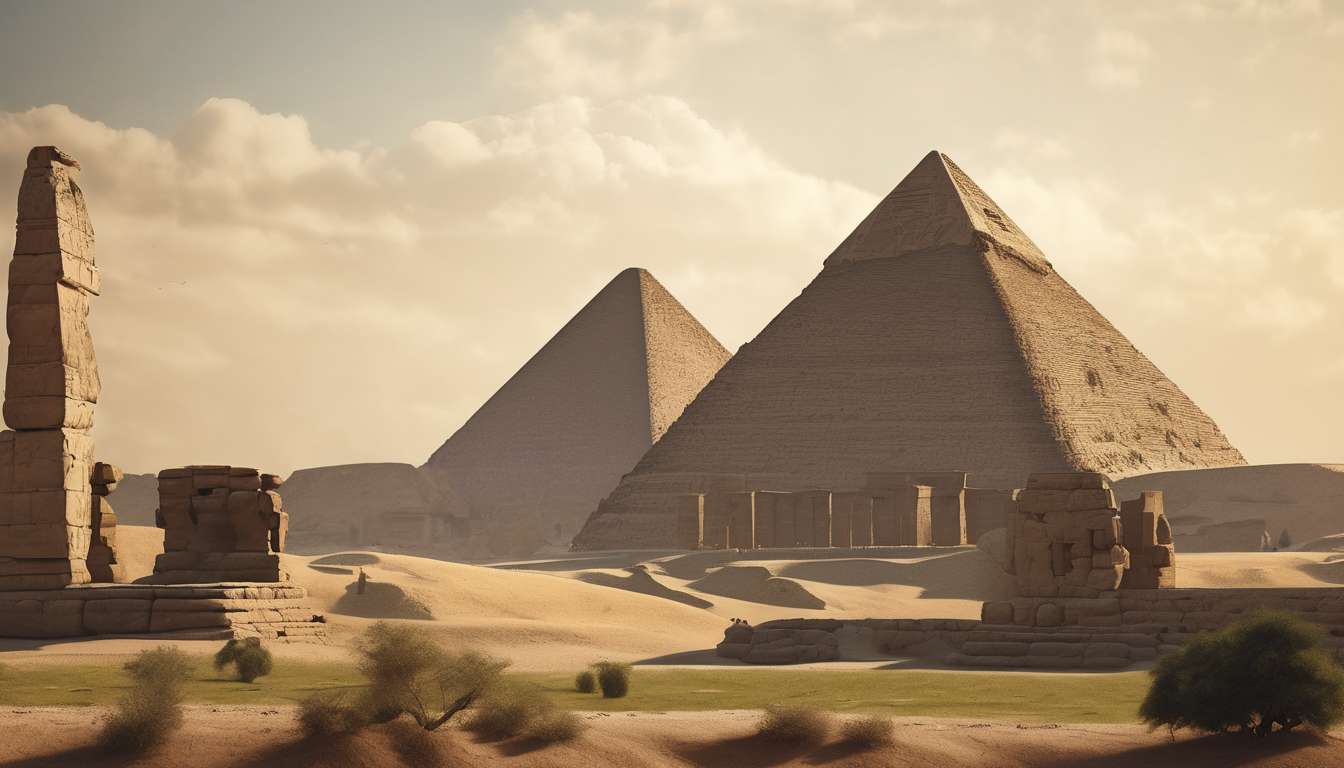
As we embark on this exploration of classic monuments, we find ourselves captivated by the stories etched into their every stone and curve. Our journey takes us across terrains as varied as the monuments themselves, inviting us to compare the landscapes that cradle these architectural marvels.
Together, we delve into the majestic profiles of:
- The pyramids rising from the arid sands of Egypt
- The enduring grace of the Parthenon perched on Athens’ rocky heights
- The mysterious allure of Stonehenge standing resolute on the rolling plains of Wiltshire
By examining the interplay between these iconic structures and their surrounding environments, we gain deeper insights into the civilizations that built them and the natural forces that have shaped their enduring legacies.
As we traverse these historic sites, we invite you to join us in uncovering the intricate connections between monument and terrain—connections that have defined cultural narratives for millennia.
Pyramids in the Egyptian Desert
The Egyptian desert is home to some of the world’s most iconic pyramids, showcasing ancient engineering marvels. As we explore these awe-inspiring monuments, we can’t help but feel a deep connection to the past. The pyramids, standing tall against the vast, arid terrain, are testaments to the ingenuity and ambition of ancient civilizations.
Their architecture, with precise alignments and intricate designs, invites us to imagine the communities that once thrived here, united in their pursuit of monumental achievement.
Together, we marvel at the Great Pyramid of Giza, the largest and most renowned of these structures, as it dominates the landscape. We walk along the desert sands, feeling the crunch beneath our feet, and envision the hands that meticulously placed each stone.
These pyramids are more than just architectural feats; they’re symbols of human perseverance and unity. In their presence, we find a sense of belonging, sharing in a legacy that spans millennia and bridges generations.
Parthenon on Athenian Acropolis
Rising majestically from the heart of Athens, the Parthenon captivates us with its enduring grace and storied history. This iconic monument, perched atop the Athenian Acropolis, draws us into a shared legacy of ancient civilization and architectural prowess. We find ourselves connected through its timeless beauty and the rich narratives it holds.
The terrain of the Acropolis itself adds to the Parthenon’s allure, providing a striking backdrop that enhances its splendor.
As we explore its architecture, we marvel at the precision and artistry that went into its creation. The Parthenon stands as a testament to human ingenuity, with its Doric columns and intricate sculptures reflecting the dedication of those who built it.
It’s not just a structure; it’s a symbol of unity and cultural identity that resonates with us even today. Standing before it, we feel a part of something greater, a community tied to the roots of Western civilization.
Stonehenge on Wiltshire Plains
In the vast expanse of the Wiltshire Plains, Stonehenge rises as an enigmatic circle of stones that invites us to ponder its ancient mysteries. As we stand together, embraced by the sweeping landscape, we’re drawn into the monument’s allure. Its architectural precision speaks to a shared human heritage and the ingenuity of those who walked these same terrains thousands of years ago.
Stonehenge isn’t just a collection of stones; it’s a testament to ancient architecture that connects us across time. The effort involved in transporting massive stones across the plains reveals a communal endeavor, one that echoes our own desires for connection and purpose.
As we explore the terrain, we can’t help but imagine the gatherings that once took place here, fostering a sense of community and shared experience.
Together, we are part of Stonehenge’s enduring story, a narrative etched into the landscape, reminding us of our place in the continuum of human achievement.
Colosseum amidst Roman Ruins
Amidst the sprawling Roman ruins, the Colosseum stands as a monumental testament to ancient engineering and the vibrant life of the empire. As we walk among these historic terrains, we feel a profound connection to a time when the Colosseum, an architectural marvel, was the heart of Roman culture. The monument’s grand arches and colossal structure tell stories of gladiatorial games and public spectacles that once brought thousands together.
We can’t help but admire how the terrain around the Colosseum has preserved its essence. It’s not just a pile of stones; it’s a piece of history where Rome’s past comes alive. Walking through the ruins, we sense the architectural genius that shaped this ancient world.
Together, we appreciate the way these monuments foster a shared identity, reminding us that we’re part of a larger historical narrative. The Colosseum, amidst its fellow ruins, invites us to belong to something timeless, a community bound by history and heritage.
Taj Mahal by Yamuna River
Nestled beside the tranquil Yamuna River, the Taj Mahal captivates us with its breathtaking beauty and intricate craftsmanship. As we stand before this monument, we feel a sense of belonging to a shared human heritage. The majestic terrain around the Taj Mahal provides a serene backdrop that enhances its architectural grandeur. This harmonious balance between nature and human creation is where we find solace and connection.
The Taj Mahal isn’t just a symbol of love; it’s a testament to architectural brilliance. Its symmetrical design, adorned with:
- Intricate marble inlays
- Calligraphy
reflects the pinnacle of Mughal architecture. We marvel at how the monument’s white marble façade changes hues with the shifting light, echoing the timeless dance of the Yamuna beside it.
As we walk along the manicured gardens, the monument invites us to explore its history, culture, and artistry. This shared experience strengthens our bonds and reminds us that beauty can unite us across time and distance.
Moai on Easter Island Cliffs
Perched along the rugged cliffs of Easter Island, the enigmatic Moai statues stand as silent sentinels of a once-thriving civilization. These iconic monuments, carved from volcanic rock, captivate us with their imposing presence and mysterious origins. Together, we feel a deep connection to the ancient people who crafted these masterpieces, creating a bond that transcends time and distance.
The Moai, with their distinctive, elongated faces, embody a unique blend of terrain and architecture. Their creators skillfully adapted to the island’s challenging landscape, transforming natural resources into enduring symbols of cultural identity. Standing in their shadow, we can almost sense the communal effort it took to transport these massive figures across the island’s rugged terrain.
As we explore this remarkable site, we become part of a shared history. The Moai remind us that human creativity and resilience can overcome obstacles, even in the most remote and inhospitable environments. Here, amidst the wind and waves, we find a sense of belonging.
Great Wall along Chinese Mountains
Stretching over the majestic Chinese mountains, the Great Wall stands as a testament to human ingenuity and perseverance. As we walk along its ancient stones, we feel a profound connection to history and to those who crafted this monumental architecture. This wall isn’t just a structure; it’s a symbol of unity and strength, built to protect and connect communities across diverse terrains.
The Great Wall’s architecture is a marvel, adapting seamlessly to the rugged terrain of mountains and valleys. It’s a reminder of the collective effort required to overcome natural challenges. We can imagine the countless hands, driven by a shared purpose, that shaped every brick and stone. This sense of belonging resonates deeply as we explore its winding paths.
As part of a global community, we find inspiration in the Great Wall’s endurance. It invites us to appreciate not only the beauty of the landscape but also the enduring power of human collaboration and resilience.
Petra within Jordanian Canyons
Nestled within the dramatic canyons of Jordan, Petra captivates us with its intricate carvings and timeless beauty. As we wander through its narrow passages, we feel a profound connection to those who walked these paths long before us.
The terrain itself is a testament to nature’s grandeur, framing Petra’s awe-inspiring monuments that emerge from the rose-red cliffs. It’s a place where the lines between nature and architecture blur, creating a harmonious symphony that resonates with our desire to belong to something greater.
Petra isn’t just a city; it’s a celebration of human ingenuity and resilience. The Nabataeans, with their advanced understanding of engineering and artistry, etched their legacy into the rugged landscape.
As we explore the Treasury and the Monastery, we’re reminded of the enduring spirit that has preserved this architectural marvel through the ages. Here, amidst the canyons, we find ourselves part of a shared human story, one that continues to inspire and unite us.
What are the common architectural techniques used in constructing these classic monuments?
We often marvel at the common architectural techniques used in constructing classic monuments. Builders of these iconic structures employed innovative methods to create lasting masterpieces.
From intricate masonry work to precise engineering, these monuments showcase the skill and creativity of their creators.
The attention to detail and craftsmanship in every aspect of construction is truly remarkable.
It’s fascinating to see how these techniques have stood the test of time and continue to inspire awe today.
How have climate and weather conditions affected the preservation of these monuments over time?
Climate and Weather Impact
Climate and weather conditions have significantly influenced the preservation of iconic monuments. The harsh elements often pose challenges, leading to erosion and wear.
Innovative Preservation Methods
To combat these effects, several preservation methods have been employed:
- Protective coatings
- Regular maintenance
Ongoing Preservation Efforts
Despite the continuous battle against nature, our collective efforts have ensured the longevity of these historic sites. These strategies ensure that monuments continue to stand the test of time, allowing future generations to appreciate and enjoy them.
Are there any local legends or myths associated with these monuments that have influenced their historical significance?
Yes, there are several local legends and myths associated with these monuments that have significantly influenced their historical significance.
Cultural Importance:
These stories have been passed down through generations, adding layers of mystery and cultural importance to the sites.
Unique Perspectives:
They provide a unique perspective on the monuments’ origins and purpose, enriching our understanding of their significance in the context of local folklore and traditions.
Conclusion
As you reflect on these iconic monuments, you realize the diverse terrains they inhabit truly enhance their grandeur.
From the stark desert sands to the lush riverbanks, each setting adds a unique dimension to these timeless structures.
Whether perched on cliffs or nestled within canyons, these classic monuments stand as testaments to human ingenuity and perseverance.
So, next time you visit one of these wonders, take a moment to appreciate how their surroundings elevate their beauty and significance.