
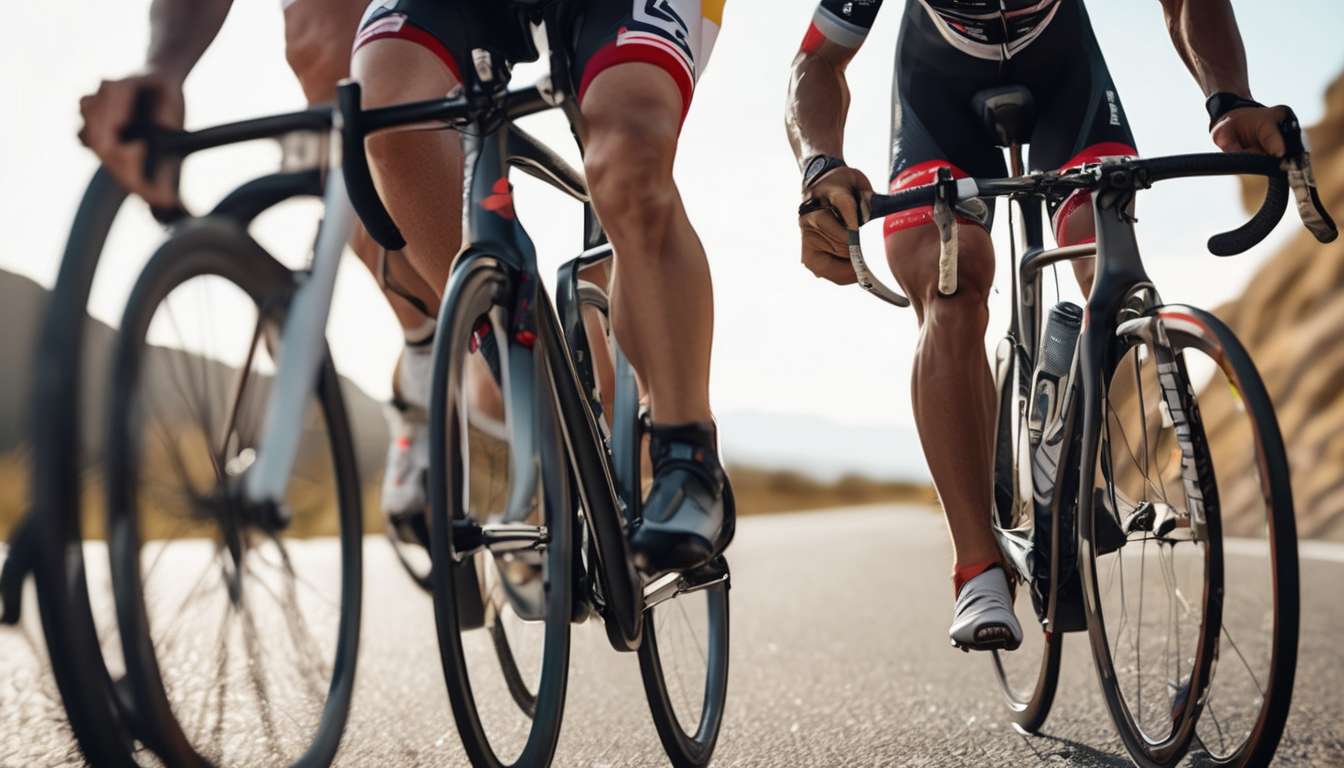
As cycling enthusiasts and avid followers of the Grand Tours, we have always been fascinated by the dynamic interplay of team roles that unfold across these grueling multi-week races. Each Grand Tour—be it the Giro d’Italia, Tour de France, or Vuelta a España—presents a unique challenge demanding adaptability and strategic finesse from every team.
Together, we eagerly watch as teams approach each stage with an intricate balance of individual ambitions and collective goals. We have witnessed how riders transition from:
- Domestiques to stage hunters
- Mountain goats to protectors of the leader
These transitions depend on the shifting demands of the race.
The way team roles evolve, influenced by:
- The terrain
- Stage profiles
- The ever-changing GC standings
offers a captivating narrative that keeps us on the edge of our seats.
In this article, we delve into the nuances of these role shifts and their impact on the pursuit of glory across cycling’s greatest stage.
The Influence of Terrain
The influence of terrain in Grand Tours dictates the strategy and roles each team member assumes during a race. We all know how crucial it is to adapt our approach based on the landscape we’re facing. Whether we’re riding through steep mountain passes, flat plains, or rolling hills, the terrain shapes our collective strategy and the specific roles we take on.
In the mountains:
- We rely on our climbers, those team members who thrive in high-altitude challenges.
- They lead the charge, setting the pace, and sometimes breaking away.
On the flat stages:
- Our sprinters take the spotlight.
- They’re the ones who save energy early and explode with power in the final kilometers.
Rolling terrain:
- This requires a balanced team strategy.
- Each of us must be ready to support the leader or chase down breakaways.
Together, we adapt to the terrain, making each stage a shared journey.
Strategic Adaptations
Adapting our strategy on the fly is crucial for addressing the unpredictable challenges we face in Grand Tours. Each stage presents unique terrain and conditions, demanding that we continuously reassess our approach.
Cohesion and adaptability are our strengths as a team. Our strategy must be flexible enough to accommodate sudden shifts in race dynamics, whether it’s the steep climbs or the winding descents.
Roles within the team evolve as we tackle varying terrains:
- Climbers might take the lead on mountainous stretches.
- Sprinters dominate the flats.
Yet, we’re always ready to switch roles if the race requires it. It’s not just about our individual strengths but how we leverage them for the collective success of the team.
By being adaptable, we maintain our edge, ensuring that each member contributes effectively, no matter the situation. Together, we navigate the complexities of the race, united in our pursuit of victory.
Riders as Protectors
In every race, our riders act as protectors, shielding key teammates from wind and potential hazards to ensure optimal performance. We know that a successful team shares an unspoken bond, where each of us embraces vital roles in harmony with the collective strategy.
As protectors, we navigate diverse terrain, whether it’s the grueling climbs or the swift descents, always positioning ourselves to guard our leaders.
Our strategy hinges on understanding the terrain and anticipating how it affects our roles.
- On flat stages, we form protective barriers, blocking the wind and conserving our leader’s energy.
- When the road gets tough, we rally, positioning ourselves to fend off competitors and potential mishaps.
It’s a dance of discipline and trust, where each of us knows our place in the grand scheme.
By committing to these roles, we reinforce a culture of belonging and unity. Together, we transform individual efforts into a cohesive force, propelling our team to victory.
Evolving Stage Strategies
As a team, we continuously adapt our strategies to tackle the unique challenges presented by each stage of the race. The terrain is never the same, and neither is our approach.
On flat stages, we might focus on protecting our sprinter by:
- Using riders in supportive roles to shield them from wind.
- Conserving their energy for a powerful finish.
When the road tilts upwards, our strategy shifts, requiring:
- Climbers to take on leadership roles.
- Navigating the ascent with precision and endurance.
Our unity is our strength, with each member understanding their role while remaining flexible to the demands of the day. Whether the terrain is flat, hilly, or a mix, we communicate and execute our strategy with seamless coordination.
We’re not just a collection of individuals; we’re a cohesive unit striving toward a common goal. In every challenge the race throws at us, our evolving strategies ensure we remain competitive and connected, reinforcing our sense of belonging.
Dynamic Mountain Roles
In the mountains, we rely heavily on our climbers’ expertise and resilience to lead the charge and set the pace for the team. As the terrain shifts to steep inclines and treacherous descents, our strategy evolves. Each of us plays a crucial role in supporting the climbers, ensuring they have the strength to conquer these challenges. We become a cohesive unit, bound by our shared objectives and the shared rhythm of our wheels spinning against the mountain roads.
Our roles are dynamic, adapting to the changing gradient and the unpredictable nature of the mountain stages. While the climbers take the lead, others in the team focus on vital support tasks:
- Carrying extra water
- Offering shelter from the wind
- Maintaining communication
This ensures our strategy is executed flawlessly.
It’s about trust and knowing that every pedal stroke counts. Together, we embrace the challenges of the mountains, knowing that each member contributes to our collective success.
Sprinters Turn Climbers
In unexpected mountain stages, even our sprinters must adapt and harness their explosive power to tackle steep climbs. The terrain challenges us to rethink our strategy, transforming roles that seemed set in stone.
As teammates, we recognize the importance of flexibility, rallying around our sprinters as they transition to climbing duties. It’s about more than just pedaling hard—it’s about finding a rhythm on the steep slopes that mirrors their sprinting cadence.
In these moments, our camaraderie strengthens. We share the burden, knowing each pedal stroke is a step toward our collective goal.
- Sprinters rely on their innate power, converting it to endurance.
- We support them through strategic positioning and timely encouragement.
This shift in roles showcases the adaptability that’s essential in the Grand Tours. We all have a part to play, and seeing a sprinter take on the climbs inspires us. Together, we conquer the terrain and redefine our limits.
Tactical Team Adjustments
Every race demands we tweak our tactics to respond swiftly to evolving conditions and competitor strategies. As a team, we embrace the need to adjust our roles based on the changing terrain and race dynamics.
When the route presents challenging climbs, our strategy shifts to:
- Protect and support our climbers
- Ensure they’re well-positioned for key ascents
On flatter terrain, we might spotlight our sprinters by:
- Orchestrating a lead-out train
- Dominating the final kilometers
We’ve learned that unity in adaptation is crucial. By communicating and realigning our roles, we maximize our collective strengths. This flexible strategy not only strengthens our team spirit but also increases our chances of success.
Every rider understands their role might evolve with the race, fostering a sense of belonging and shared purpose.
Together, we navigate the Grand Tour’s unpredictable challenges, always ready to adapt our strategies. This adaptability defines us, ensuring we remain competitive, no matter the terrain.
Impact on GC Battles
The dynamic nature of our roles directly influences the General Classification (GC) battles, allowing us to exploit every opportunity to gain time on rivals. In the ever-changing terrain of a Grand Tour, we adapt our strategy to suit the challenges ahead.
We support each other through:
- Flat stages
- Mountainous climbs
This ensures our team leader is always in the best position. Our roles shift from protecting the leader in the peloton to launching attacks when the moment is right.
Together, we analyze each stage, anticipating where the terrain will test our strengths and expose our weaknesses. Our strategy is not static; it evolves as the race unfolds.
We might:
- Designate a climber to break away in the high mountains.
- Use a strong time-trialist to set a fierce pace on flatter sections.
Through collaboration and trust, we ensure our team thrives, and we belong to something greater than ourselves.
Our unity transforms the race, making each stage a new battle for the GC.
How do weather conditions affect team roles in Grand Tours?
Weather conditions play a crucial role in determining team roles during Grand Tours.
When faced with extreme heat, our strategies adapt to ensure the team’s success. In scorching temperatures, the following become top priorities:
- Hydration
- Protection
These require all of us to pitch in and support each other.
Conversely, in freezing conditions, teamwork is vital to:
- Keep everyone warm
- Maintain focus
Weather truly shapes how we work together towards our common goal.
What psychological factors influence team dynamics during a Grand Tour?
When discussing the psychological factors that influence team dynamics during a Grand Tour, it’s crucial to consider several key aspects:
Mindset, Motivation, and Communication:
- Our mindset shapes how we approach challenges and seize opportunities.
- Motivation drives our efforts and persistence throughout the event.
- Effective communication ensures that everyone is aligned and working towards common goals.
Key Psychological Factors:
-
Confidence:
- Belief in one’s abilities boosts performance and encourages risk-taking.
- A confident team can tackle obstacles with greater ease.
-
Trust in Each Other:
- Trust fosters open communication and collaboration.
- It allows team members to rely on one another, enhancing cooperation.
-
Mental Resilience:
- Resilient teams can adapt to setbacks and maintain focus under pressure.
- This quality helps teams recover quickly from challenges.
Strategies for Success:
-
Emphasizing Positivity:
- Maintaining a positive outlook helps in overcoming difficulties and staying motivated.
-
Supporting One Another:
- Offering encouragement and assistance strengthens bonds and enhances performance.
-
Maintaining Focus:
- Staying concentrated on the objectives helps navigate the Grand Tour’s challenges efficiently.
By focusing on these psychological factors and strategies, teams can foster a strong sense of unity and camaraderie, which is essential for success during a Grand Tour.
How are team roles determined before the start of a Grand Tour?
Before the start of a Grand Tour, team roles are typically determined based on each rider’s strengths, experience, and form.
Our team carefully assesses who can excel in:
- Flat stages
- Mountains
- Sprints
- Time trials
We strategize to ensure that everyone plays a crucial part in achieving our goals.
This process involves:
- Open communication
- Trust
- Understanding among teammates
These elements create a cohesive unit ready to tackle the challenges ahead.
Conclusion
As Grand Tours progress, team roles constantly evolve to meet the challenges of varying terrains and strategic demands.
Riders shift from protectors to climbers, while sprinters adapt to become valuable climbers. Tactical adjustments are made to support GC battles.
The dynamic nature of team roles adds depth and excitement to the race, showcasing the versatility and adaptability of the riders.
Grand Tours truly test the teamwork and flexibility of each team, creating thrilling moments for fans to witness.