
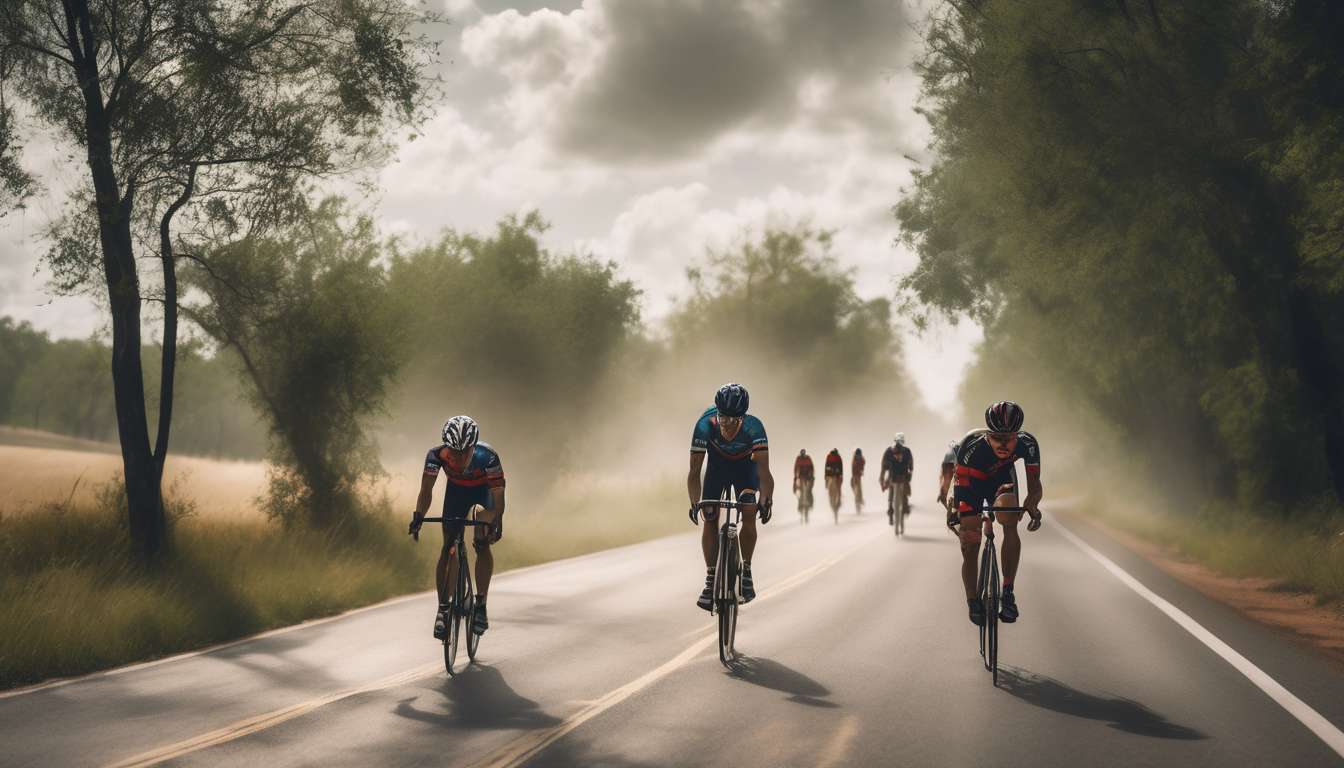
In the thrilling world of competitive cycling, we constantly navigate the dynamic forces of nature and strategy. As a peloton, we face exhilarating challenges such as crosswinds and tactical maneuvers of echelons. These elements are not mere obstacles but essential components that define the race’s very nature.
Harnessing the power of the wind involves:
-
Understanding Crosswinds: Transforming the wind from a hindrance to a strategic ally.
-
Mastering Echelons: Moving with precision and leveraging the wind to our advantage.
This dance with the elements requires not only individual skill but also a cohesive team effort. Key aspects include:
- Communication
- Trust
In this article, we will delve into the tactical essentials that enable us to thrive amidst crosswinds and form effective echelons. These are the secrets behind pivotal aspects of cycling that can make or break our race.
Wind Dynamics
Understanding wind dynamics is crucial for predicting how crosswinds will impact echelons during a race. Together, we can master this art, ensuring our place within the peloton.
When crosswinds sweep across the road, they force us to adapt our strategy and positioning. Echelons form as a response, creating diagonal lines to shelter teammates from the gusts.
- It’s not just about survival; it’s about community and trust.
- Drafting behind one another helps conserve energy and maintain speed.
In these moments, we must read the wind like an open book. It’s not just a matter of feeling the breeze on our faces; it’s about sensing its shifts and anticipating its next move.
By positioning ourselves correctly in an echelon, we:
- Share the workload.
- Protect each other from the relentless push of crosswinds.
Let’s harness this knowledge to stay strong and connected, supporting each other as we navigate the challenges that lie ahead in the race.
Team Coordination
Effective Team Coordination
Effective team coordination ensures we move seamlessly in our echelons, maximizing both speed and energy conservation. When crosswinds challenge us, our unity becomes our greatest asset. We rely on each other’s skills, trusting that every team member understands their role in the formation. This mutual understanding allows us to draft efficiently, minimizing the wind’s resistance and preserving our collective energy.
Echelon Rhythm and Rotation
In the heart of an echelon, we find our rhythm. The lead rider sets the pace, and we rotate smoothly, each taking a turn at the front. This rotation is crucial because:
- It ensures no one bears the burden too long.
- We all share the effort equally.
Communication and Anticipation
Our communication is key, as it helps us anticipate shifts in wind and react accordingly. We:
- Signal changes.
- Adjust our positions.
- Maintain our formation’s integrity.
Resilience and Unity
Together, we create a moving unit, resilient against the elements. Our coordination keeps us strong, connected, and ready to face whatever the road brings.
Formation Strategies
Mastering various formation strategies allows us to optimize our efficiency and endurance in challenging wind conditions.
Crosswinds Strategy: Echelons
- When faced with crosswinds, riding in echelons is our best approach.
- By positioning ourselves diagonally, we shield each other from the brunt of the wind’s force.
- This strategy conserves energy and maintains momentum.
In echelons, we create a sense of unity and protection, where each member contributes to the collective strength of the group.
Importance of Drafting
- As we move through crosswinds, drafting becomes critical.
- By following closely behind one another, we reduce air resistance.
- This increases our speed without expending additional effort.
Our formation becomes a well-oiled machine, with each of us relying on the others to maintain position and pace.
Team Dynamics and Support
- Together, we create an environment where everyone feels supported and valued.
- By mastering these formation strategies, we thrive as a team.
Ultimately, we overcome the challenges posed by the elements and achieve our shared goals.
Drafting Techniques
Mastering the art of drafting allows us to maximize efficiency and speed by skillfully minimizing air resistance. When we ride together, we create a powerful sense of unity, much like a well-oiled machine.
In the presence of crosswinds, our drafting techniques transform into an art form. We must position ourselves in echelons, spreading out diagonally across the road. This formation ensures that each of us benefits from the slipstream created by the rider directly ahead.
The beauty of drafting lies in its simplicity and effectiveness. By reducing the wind’s impact, we conserve precious energy, allowing us to ride longer and faster as a cohesive group.
In crosswinds, understanding how to form echelons is crucial. It requires:
- Trust
- Communication
- Precise timing
As we draft, we become a part of something larger, an interconnected chain that thrives on collaboration.
Let’s embrace these techniques, enhancing our cycling experience through camaraderie and shared goals. Together, we conquer the road.
Leadership Roles
Effective Leadership in Cycling
Effective leadership roles in cycling demand that we adapt swiftly to dynamic conditions while guiding and motivating our group. We thrive under pressure, recognizing the nuances of crosswinds and their impact on our formation.
Strategic Positioning
As leaders, it’s our responsibility to position our team strategically:
- Form echelons to maximize efficiency.
- Maintain momentum.
- Ensure optimal drafting to conserve energy for when it’s needed most.
By taking charge and making timely decisions, we ensure everyone benefits from these strategies.
Unity and Trust
Our role isn’t just about being at the front; it’s about fostering a sense of unity. We work together by:
- Reading subtle shifts in wind direction.
- Adjusting our line to shield one another.
It’s in these moments that we cultivate trust, knowing each of us will protect the group from the relentless elements.
Inspiring Confidence and Resilience
As leaders, we inspire confidence and resilience, creating an environment where every member feels valued and essential. Together, we face challenges head-on, turning adversity into collective strength.
Communication Protocols
Clear and consistent communication ensures we stay coordinated and responsive to the ever-changing conditions during our ride.
In the midst of crosswinds, our ability to relay information swiftly can make or break our formation. As we maneuver into echelons, we need to alert each other about changes in wind direction and speed. This helps us optimize our drafting strategy, allowing us to conserve energy and maintain our momentum as a cohesive unit.
We use a combination of hand signals and verbal cues to convey crucial information.
- A simple wave or a call out can indicate when we’re shifting positions or adjusting our pace.
- By doing so, we ensure everyone is aware and prepared for any tactical changes.
It’s important that we listen actively and respond promptly, fostering a sense of unity and trust within our group. This shared understanding of communication protocols strengthens our collective effort, enabling us to face the challenges of crosswinds and maintain effective echelons.
Tactical Adjustments
To navigate crosswinds effectively, we must constantly assess and adjust our formation to maintain optimal speed and efficiency. It’s crucial to remember that every member plays a vital role in our echelon. Our collective drafting skills allow us to conserve energy and protect each other from the relentless gusts. We work as one unit, shifting seamlessly to counteract the crosswinds while maximizing the aerodynamic benefits of our formation.
As we ride, we need to:
- Communicate clearly
- Adapt swiftly
When the wind direction changes, our echelon position must also shift to keep everyone sheltered. This requires trust and quick decision-making, ensuring nobody is left exposed.
Key strategies include:
- Understanding when to move up
- Knowing when to drop back
- Rotating efficiently
Together, we form a community of riders, each contributing to the strength and efficiency of the group. Let’s embrace these tactical adjustments, knowing they bind us closer and propel us forward as a unified force.
Race Execution
In race execution, maintaining our formation’s integrity while adapting to dynamic conditions on the course is crucial. Our unity is our strength, especially when crosswinds threaten to scatter us.
By forming echelons, we:
- Shield one another from the wind’s force
- Conserve energy through strategic drafting
It’s not just about individual effort; it’s about moving as one cohesive unit.
We’ve all felt the strain when crosswinds hit, but together, we create a buffer, allowing everyone to ride more efficiently. The art of forming echelons isn’t merely technical; it’s about trust and communication.
In this context, we:
- Signal shifts
- Ensure everyone finds their place
- Adjust seamlessly to changing wind angles
This collective effort binds us, turning potential chaos into controlled power.
Drafting becomes our lifeline, offering a reprieve from the relentless force of the wind. By staying close, we create a space where each of us belongs, united against the elements, propelling us forward as a team.
How do echelons impact a cyclist’s energy expenditure over a long race?
Echelons in a race can significantly impact a cyclist’s energy expenditure over the long haul.
Riding in a well-formed echelon allows cyclists to:
- Conserve energy by drafting behind others.
- Reduce wind resistance.
This strategic positioning helps maintain a higher speed with less effort, which is crucial for preserving stamina throughout the race.
Mastering the art of echelons can make a notable difference in performance and endurance during long races.
What historical races are famous for their use of crosswind strategies?
We’ve always been fascinated by the historical races that showcased brilliant crosswind strategies. Classics like Paris-Roubaix and the Tour de France have seen riders masterfully navigate the wind to gain a crucial advantage.
These races serve as iconic examples of how tactical decisions in crosswinds can shape the outcome of a competition. It’s inspiring to see the tactics and teamwork that come into play during these legendary events.
Key elements involved in these strategies include:
- Positioning: Riders strategically place themselves within the peloton to shield from the wind.
- Echelons: Formations that allow riders to share the workload and reduce wind resistance.
- Timing: Choosing the perfect moment to break away or push the pace when the crosswinds are strongest.
These elements highlight the intricate planning and execution required to succeed in such challenging conditions.
How do weather forecasts influence team strategies before a race?
When we consider how weather forecasts influence team strategies before a race, we focus on adapting our plans to the elements.
By analyzing the predicted conditions, we can tailor our approach to:
- Maximize our strengths
- Exploit any opportunities that may arise
Being prepared for the weather not only helps us perform better but also gives us a competitive edge over our opponents.
Conclusion
As you navigate the intricate dance of crosswinds and echelons, remember the key tactical essentials:
-
Understanding Wind Dynamics
Grasp how wind affects movement and leverage it to your advantage. -
Coordinating with Your Team
Work cohesively with your teammates to maximize efficiency and success. -
Utilizing Strategic Formations
Employ formations that optimize wind protection and energy conservation. -
Perfecting Drafting Techniques
Hone your ability to draft effectively behind other riders. -
Embracing Leadership Roles
Step up when necessary to guide and motivate your team. -
Maintaining Clear Communication
Ensure open lines of communication for seamless team operations. -
Making Tactical Adjustments on the Fly
Stay adaptable and ready to modify strategies as conditions change. -
Executing Your Race Plan with Precision
Stick to your plan while remaining flexible to the race dynamics.
By mastering these elements, you’ll be well-equipped to handle any challenges the road throws your way.
So, keep pedaling strong and smart, and let the wind carry you to victory.