
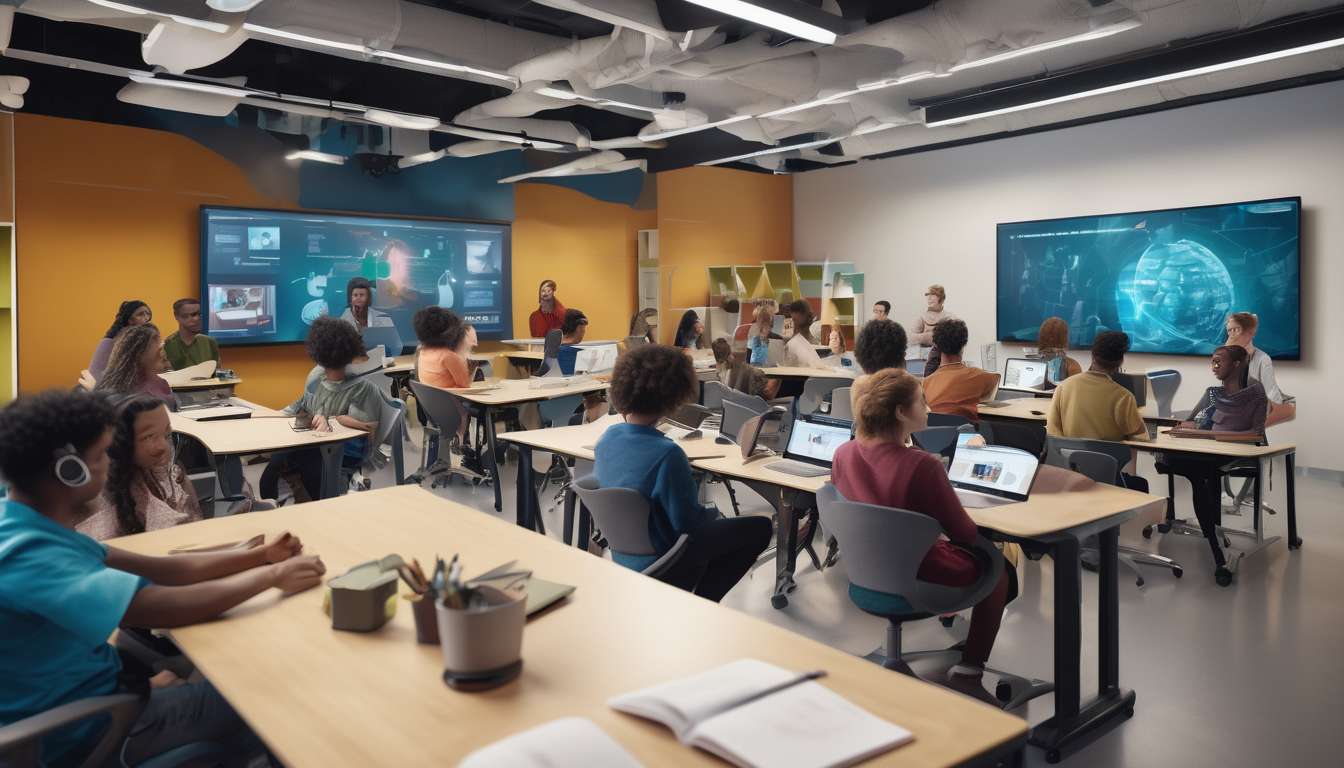
In the ever-evolving landscape of education, we continuously seek ways to enhance learning experiences and outcomes. As educators and designers of educational content, we understand the critical role of course design in shaping student success. Our collective goal is to create environments that not only engage learners but also foster meaningful understanding and skills development.
In this article, we will explore five pivotal course design features that have a profound impact on educational outcomes. By focusing on these elements, we aim to uncover strategies that can transform the learning journey:
-
Clarity: Ensuring course objectives and expectations are clearly defined and communicated.
-
Interactivity: Incorporating interactive elements that engage students and encourage active participation.
-
Accessibility: Designing courses that are accessible to all students, regardless of their needs or circumstances.
-
Feedback Mechanisms: Implementing systems for timely and constructive feedback to guide student learning.
-
Real-World Relevance: Connecting course content to real-world scenarios to enhance understanding and applicability.
Through our shared experiences and insights, we hope to inspire educators to rethink and refine their course designs. Our aim is to ensure they meet the diverse needs of all students.
Join us as we delve into these essential components and consider how they can be integrated into your own courses for maximum impact.
Importance of Clarity in Course Design
Clear course design is crucial because it helps us understand expectations and navigate the learning process effectively.
When we have clarity in our courses, we feel more connected and confident in our ability to succeed. Knowing exactly what’s expected allows us to focus our efforts on meaningful engagement with the material and each other. This sense of direction fosters a learning environment where everyone feels valued and included.
Moreover, clarity in course design enhances accessibility. When information is presented in a straightforward and organized manner, it becomes easier for all of us to access and comprehend, regardless of our diverse learning needs. This inclusivity ensures that everyone can participate fully, breaking down barriers and encouraging a sense of community.
Ultimately, clarity in course design empowers us to engage with the content more deeply. By knowing exactly what steps to take and how to approach challenges, we can immerse ourselves in learning, creating a shared experience that brings us closer together as a learning community.
Enhancing Interactivity for Student Engagement
To boost student engagement, we should incorporate interactive elements that encourage active participation and collaboration. By doing so, we create a learning environment where students feel connected and valued.
Key Interactive Elements:
-
Discussion forums: Provide a platform for students to share ideas and learn from each other’s perspectives.
-
Live polls: Engage students in real-time and gather immediate feedback on their understanding.
-
Group projects: Foster a sense of community and belonging, encouraging teamwork and collaboration.
These activities not only enhance engagement but also provide clarity in understanding complex topics, as students learn from each other’s perspectives.
Utilizing Technology for Dynamic Learning:
In our courses, let’s utilize technology to make learning more dynamic. Tools like virtual simulations and interactive quizzes can transform passive content into active experiences.
Benefits of Active Engagement:
-
Improved retention: Students retain information better when they actively engage with the material.
-
Increased investment: Active participation makes students feel more invested in their learning journey.
Designing for Accessibility:
It’s crucial that these interactive elements are designed with accessibility in mind. This ensures that all students, regardless of their individual needs, can participate fully.
By prioritizing interactivity, clarity, and accessibility, we can cultivate an inclusive atmosphere that inspires and motivates every learner to succeed together.
Ensuring Accessibility for All Learners
To ensure every learner can fully participate, we must prioritize designing courses that accommodate a wide range of abilities and needs. Our mission is to create an inclusive environment where everyone feels they belong.
By focusing on accessibility, we ensure that all students, regardless of their circumstances, can engage meaningfully with the material.
Let’s make sure our content is clear and straightforward. This clarity not only aids understanding but also boosts engagement. When learners grasp the material effortlessly, they become more motivated and involved.
- Use diverse formats like:
- Videos
- Transcripts
- Interactive elements
These formats cater to different learning preferences and support various needs.
Moreover, incorporating universal design principles can help us build courses that are accessible from the start. By considering elements such as:
- Font size
- Color contrast
- Alternative text for images
We make our courses inviting for everyone.
Together, we can create a learning space that celebrates diversity and fosters a sense of belonging for all.
Implementing Effective Feedback Systems
To enhance learning outcomes, we need to establish robust feedback systems that provide timely and constructive insights. These systems are crucial for fostering a sense of community and belonging among learners. By ensuring feedback is clear and actionable, we can guide our students towards improved performance and greater confidence.
Clarity in feedback means students understand exactly what they’ve done well and where they can improve. This transparency strengthens engagement, as learners feel supported in their journey.
It’s essential that feedback be:
- Accessible to everyone
- Meeting diverse needs
- Ensuring no one is left behind
Whether through digital platforms or in-person discussions, we can tailor feedback to be inclusive and supportive.
Engagement rises when students see that their efforts are recognized and valued. By creating a loop of continuous feedback, we invite students to actively participate in their learning process.
Together, we build an environment where every voice matters, and everyone feels empowered to succeed.
Connecting Content to Real-World Contexts
In course design, we prioritize linking academic content to real-world contexts to enhance relevance and deepen understanding for our learners.
When students see how their studies apply beyond the classroom, their engagement naturally increases. They feel a sense of belonging in their field, seeing themselves as part of a wider community.
By ensuring clarity in our connections between theory and practice, we make content more accessible to diverse learners, allowing everyone to grasp complex ideas more easily.
We strive to create courses where learners aren’t just passive recipients of information. Instead, they actively engage with material that feels meaningful and applicable to their lives. This approach fosters a learning environment where:
- Students can visualize their future roles and contributions.
- Educational experiences mirror real-world scenarios, preparing students for career challenges.
By emphasizing these connections, we nurture a sense of purpose and motivation, making education a more inclusive and rewarding journey for all.
Promoting Active Learning Strategies
We prioritize active learning strategies to ensure our students actively participate in their educational journey, fostering critical thinking and collaboration. By doing this, we create a community where everyone feels included and valued.
Our focus on clarity helps students understand what’s expected of them, making it easier for them to engage deeply with the material. We design activities that require them to:
- Think on their feet
- Work in teams
- Solve problems creatively
This approach cultivates a sense of belonging and shared purpose.
Engagement is at the heart of our approach. We encourage:
- Discussion
- Debate
- Hands-on projects
These methods make learning interactive and fun. In this way, students aren’t just passive recipients of information; they’re active contributors to their own education.
Accessibility is a key consideration. We ensure that all students, regardless of their learning styles or needs, can participate fully. By promoting active learning, we empower our students to take charge of their educational experience, creating a more inclusive and dynamic learning environment.
Designing Engaging Multimedia Elements
To enhance our course design, we integrate multimedia elements that captivate and engage students, making learning more dynamic and memorable. By incorporating:
- Videos
- Podcasts
- Interactive visuals
we ensure that our content is not only informative but also engaging. This approach fosters a sense of belonging as students connect with the material in diverse and meaningful ways.
We prioritize clarity in our multimedia elements to prevent confusion and ensure that students can easily comprehend the material. Clear and concise content helps maintain students’ interest and promotes better retention of information.
Additionally, we focus on accessibility, ensuring that all students have equal opportunities to interact with our resources. This might include:
- Providing transcripts for audio content
- Adding captions for videos
By crafting these elements thoughtfully, we create an inclusive environment where everyone feels valued and supported. Our commitment to engagement, clarity, and accessibility in multimedia design strengthens our community, making learning a shared and enjoyable experience for all.
Fostering Collaborative Learning Environments
To foster collaborative learning environments, we actively encourage students to engage in group projects and discussions that promote teamwork and collective problem-solving. We believe that a sense of belonging is essential for effective collaboration, and we strive to create spaces where every voice is heard and valued.
By providing clear guidelines and expectations, we ensure that students understand their roles within the group, which enhances clarity and reduces confusion.
Engagement is key to successful collaboration. Therefore, we incorporate interactive elements that require students to:
- Work together
- Share ideas
- Build on each other’s strengths
This approach not only reinforces the course material but also helps students develop critical interpersonal skills.
Additionally, we prioritize accessibility in our course design, ensuring that all students, regardless of their backgrounds or abilities, can participate fully. By using accessible tools and platforms, we make it easier for everyone to contribute and connect, fostering an inclusive environment where collaboration can truly thrive.
How can instructors effectively measure the impact of course design features on student outcomes?
To effectively measure the impact of course design features on student outcomes, we analyze various data sources:
- Assessment results
- Student feedback
- Retention rates
By collecting and analyzing this information, we can identify which design elements are most beneficial to student success.
This data-driven approach helps us make informed decisions to enhance our courses and ultimately improve student outcomes.
What are some common challenges educators face when integrating new course design features, and how can they be overcome?
When integrating new course design features, we often face challenges such as resistance to change and lack of training.
Overcoming these obstacles requires several key strategies:
-
Clear Communication
- Clearly articulate the benefits and goals of the new design features.
- Keep all stakeholders informed about the changes and the implementation timeline.
-
Professional Development Opportunities
- Offer workshops and training sessions to help educators become familiar with the new tools and techniques.
- Encourage continuous learning and adaptation to new educational technologies.
-
Support from Colleagues
- Foster a supportive environment where educators can share experiences and solutions.
- Encourage mentorship and peer collaboration to enhance learning and implementation.
By fostering a culture of collaboration and providing resources for skill development, educators can successfully implement innovative design elements. Together, we can navigate these challenges and create engaging learning experiences that benefit our students.
How does the choice of assessment types influence the effectiveness of course design?
When we select assessment types, they play a crucial role in determining the effectiveness of our course design.
Different assessment methods can impact:
- Learning outcomes
- Student engagement
- Overall success
Aligning Assessments with Learning Objectives
By choosing assessments that align with learning objectives and provide meaningful feedback, we can enhance the effectiveness of our course design.
Considerations for Effective Assessment Selection
It’s essential to consider the variety of assessment types available and select those that best support our educational goals.
Conclusion
In conclusion, when designing courses, remember to prioritize the following key aspects:
-
Clarity: Ensure that course objectives and instructions are clear and easy to understand.
-
Interactivity: Incorporate interactive elements to engage students actively.
-
Accessibility: Make sure that all course materials are accessible to every student, regardless of their abilities.
-
Feedback: Provide timely and constructive feedback to support student learning.
-
Real-world Connections: Relate course content to real-world scenarios to enhance relevance.
-
Active Learning: Encourage active participation through discussions, projects, and problem-solving activities.
-
Multimedia: Use a variety of multimedia resources to cater to different learning styles.
-
Collaboration: Promote collaboration among students to build a community of learners.
By incorporating these features thoughtfully, you can significantly influence student outcomes and create a more engaging and effective learning experience.
Keep these key aspects in mind as you develop your courses to better support student success and foster a dynamic and inclusive learning environment.